 中文
中文
What are the working characteristics and process flow of the hardening equipment of the precision rack? With these questions in mind, let's take a look at the following introduction.
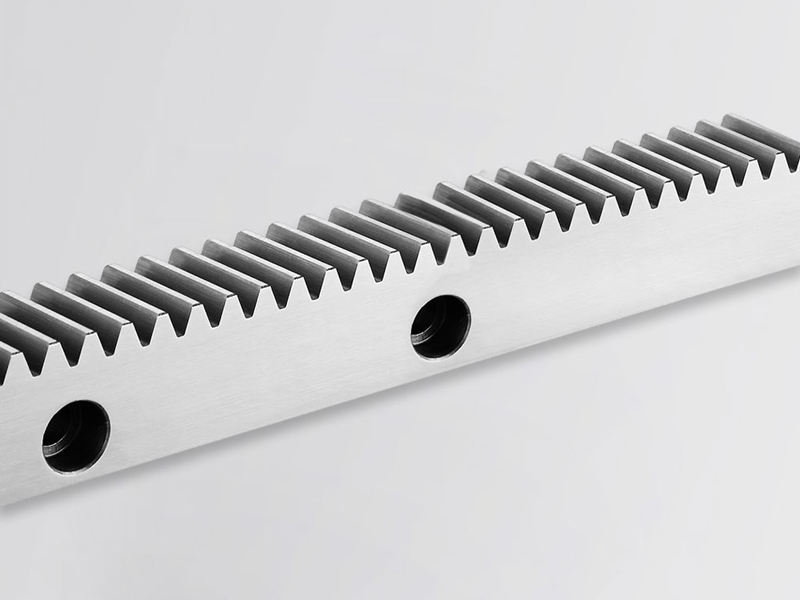
1, working characteristics: longitudinal and transverse composite magnetic field induction heating quenching: high heating efficiency, fast speed, only 6 seconds/piece; The hardened layer has a uniform hardness distribution. Low power consumption; The edge of the tooth surface is consistent with the middle. The root hardening layer can be accurately controlled. The deformation is small.
2. Working principle: Connect the high-frequency power supply, connect the electrical contacts of the inductor into a loop, and the sample above the inductor becomes the heating body to be induced. In this way, the workpiece surface is not only heated by the longitudinal magnetic field, but also by the transverse magnetic field, so as to achieve the purpose of uniform heating. Changing different sensors can heat different shapes of workpiece surfaces. Compared with the traditional high frequency heating, the workpiece surface heating current is more concentrated, higher density, and faster heating speed. With this method, the power density used to heat the workpiece surface is several times that of traditional induction heating, and an efficient and high-quality heat treatment can be performed on the workpiece surface.
3, the hardening process of the precision rack: place it on the sensor, the cylinder drops and compresses the rack. The induction electrode, bracket and sensor are connected. The distance between the sensor and the frame can be adjusted as needed. The combined longitudinal and transverse magnetic fields generate an induced current that simultaneously heats the tooth surface. The heating rate is very fast. The heating time is controlled. When this temperature is reached, the device stops heating and automatically sprays the quenching liquid onto the tooth surface to complete the quenching process.